高性能 FFT 库 zldsp::fft
zldsp::fft 是一个基于 Google Highway 构建的 header-only C++ 快速傅里叶变换(FFT)库,采用 Apache-2.0 许可证授权。源代码可在 GitHub 获取。zldsp::fft 支持 SSE2/SSE4/AVX2/NEON 等 SIMD 目标架构,且复数运算同时支持 AoS 与 SoA 两种数据布局。
使用方法
- C++ 标准:C++20 或更高版本
- Google Highway:项目中必须包含并链接 Google Highway。本库头文件要求能够正确引入并解析以下包含路径:
#include <hwy/aligned_allocator.h>
#include <hwy/highway.h>
编译选项
要启用 SIMD 加速,必须设置正确的编译器选项。Highway 将根据这些编译标志自动检测目标架构。
| SIMD 目标架构 | GCC/Clang | MSVC |
|---|---|---|
| SSE2 | -march=x86-64 |
无需额外参数 |
| SSE4 | -march=x86-64-v2 -mase -mpclmul |
不支持 |
| AVX2 | -march=x86-64-v3 -maes -mpclmul |
/arch:AVX2 |
| NEON | -march=armv8-a+simd |
/arch:armv8.0 |
API
引入 /src 目录下的相关头文件即可。
CFFT 与 RFFT 均以浮点类型(如 float 或 double)作为模板参数,并通过以 2 为底的 FFT 阶数 order 进行实例化(其中大小 size = 1 << order)。
复数 FFT (CFFT)
#include "src/zldsp_fft_cfft.hpp"
#include <vector>
#include <complex>

// 基于 float 类型的 1024 (2^10) 点 CFFT
constexpr size_t order = 10;
zldsp::fft::CFFT<float> cfft(order);

std::vector<std::complex<float>> in_buffer(1 << order);
std::vector<std::complex<float>> out_buffer(1 << order);

// 正向变换(AoS 到 AoS)
cfft.forward(in_buffer.data(), out_buffer.data());

// 逆向变换(AoS 到 AoS)
cfft.backward(out_buffer.data(), in_buffer.data());
实数 FFT (RFFT)
#include "src/zldsp_fft_rfft.hpp"
#include <vector>
#include <complex>

// 基于 float 类型的 1024 (2^10) 点 RFFT
constexpr size_t order = 10;
zldsp::fft::RFFT<float> rfft(order);

std::vector<float> real_in(1 << order);
std::vector<std::complex<float>> complex_out((1 << order) / 2 + 1);
std::vector<float> sqr_mag_out((1 << order) / 2 + 1);

// 正向变换(实数 到 AoS)
rfft.forward(real_in.data(), complex_out.data());

// 逆向变换(AoS 到 实数)
rfft.backward(complex_out.data(), real_in.data());

// 正向变换(实数 到 幅度平方)
rfft.forward_sqr_mag(real_in.data(), sqr_mag_out.data());
数据布局 (AoS/SoA)
CFFT 与 RFFT 的复数运算均支持 AoS 和 SoA 布局:
AoS 在单个数组中交错存储实部与虚部数值:
std::vector<std::complex<float>> out_buffer(1 << order);
SoA 在两个独立的数组中分别连续存储实部与虚部数值:
std::vector<float> out_real(1 << order);
std::vector<float> out_imag(1 << order);
使用 SoA 的示例:
#include "src/zldsp_fft_cfft.hpp"
#include <vector>
#include <complex>

// 基于 float 类型的 1024 (2^10) 点 CFFT
constexpr size_t order = 10;
zldsp::fft::CFFT<float> cfft(order);

std::vector<std::complex<float>> in_buffer(1 << order);
std::vector<float> out_real(1 << order);
std::vector<float> out_imag(1 << order);

// 正向变换(AoS 到 SoA)
cfft.forward(in_buffer.data(), {out_real.data(), out_imag.data()});

// 逆向变换(SoA 到 AoS)
cfft.backward({out_real.data(), out_imag.data()}, in_buffer.data());
基准测试
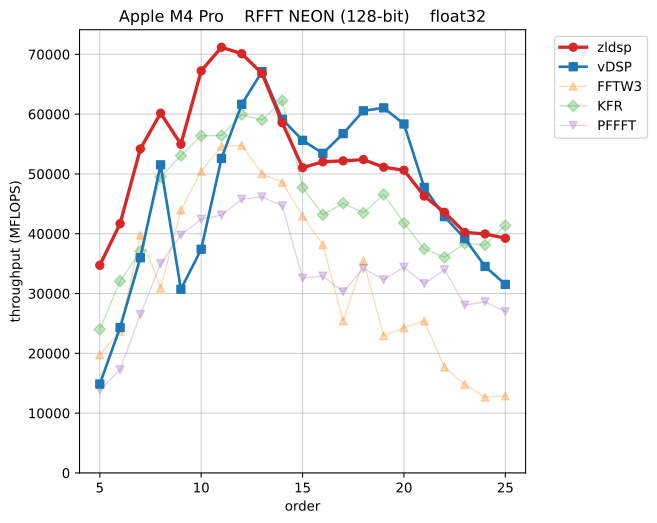
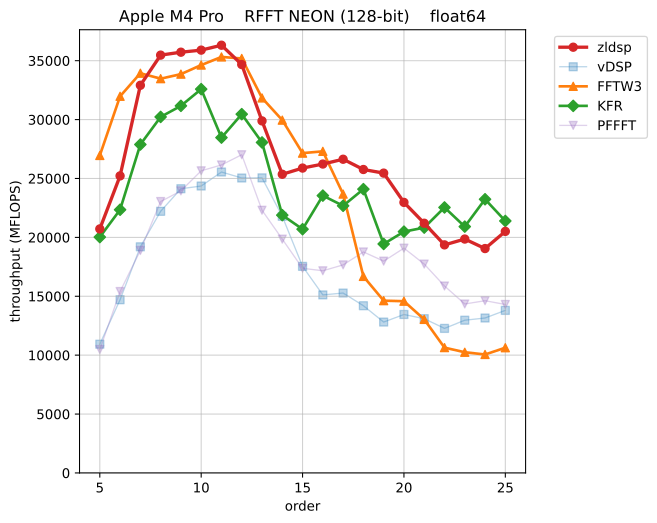
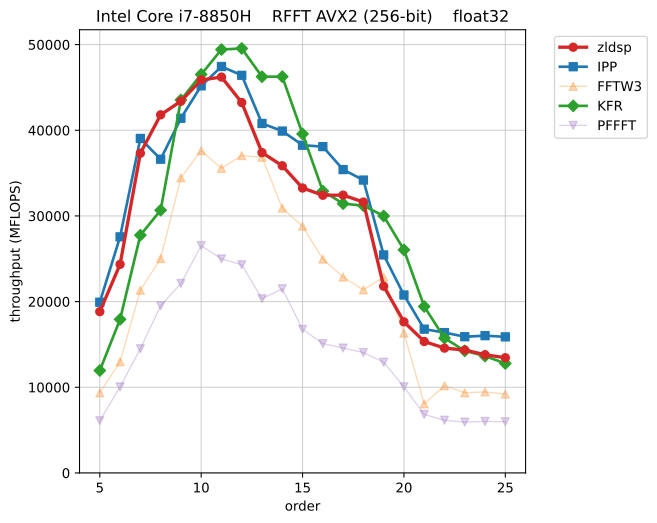
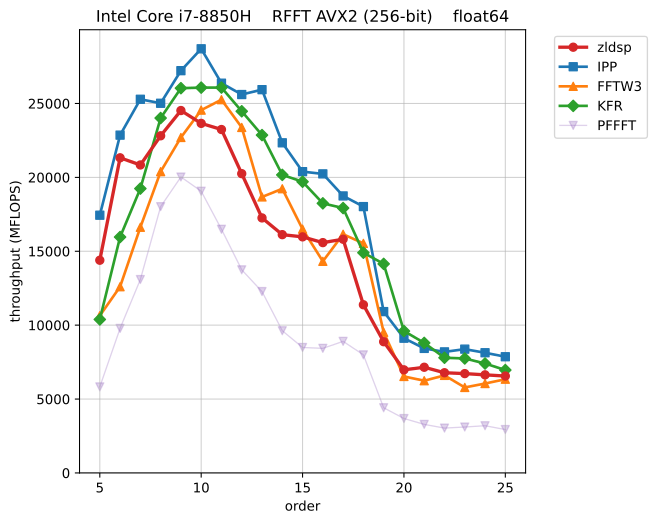
以下是部分基准测试结果,测试代码可在 GitHub 获取。作者已尽最大努力确保其他对比库的配置合理准确。所有库均使用 LLVM/Clang 或 Apple-Clang 编译构建,并采用 Google Benchmark 进行基准测试。
参与对比的库如下(各库受其自身的开源许可证约束):
IPP: Intel® Integrated Performance PrimitivesvDSP: Apple vDSPArmPL: Arm Performance LibrariesFFTW3: FFTW 3.3.10 Mirror(支持 NEON,取FFTW_MEASURE与FFTW_ESTIMATE中的更优结果)KFR: KFR 7.1.0PFFFT: PFFFT 1.1.0zldsp: zldsp::fft
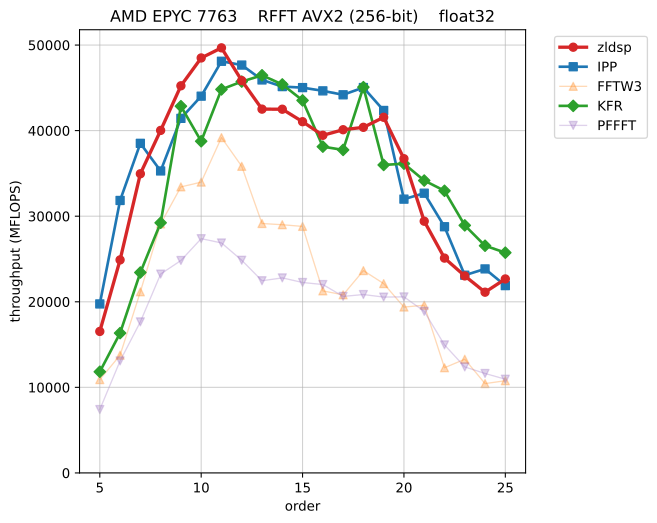
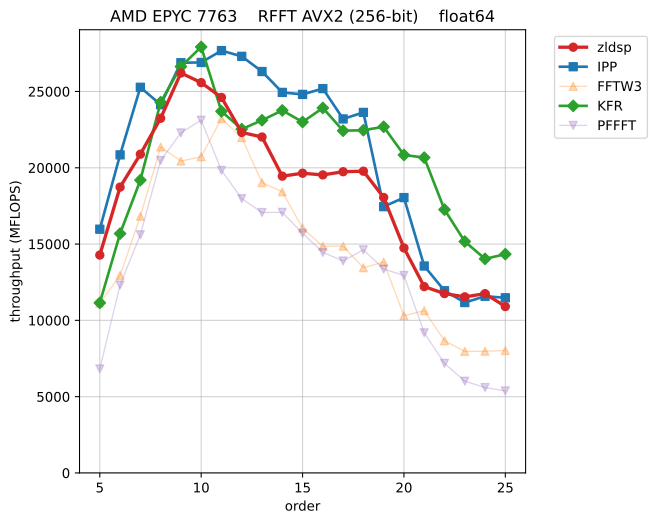
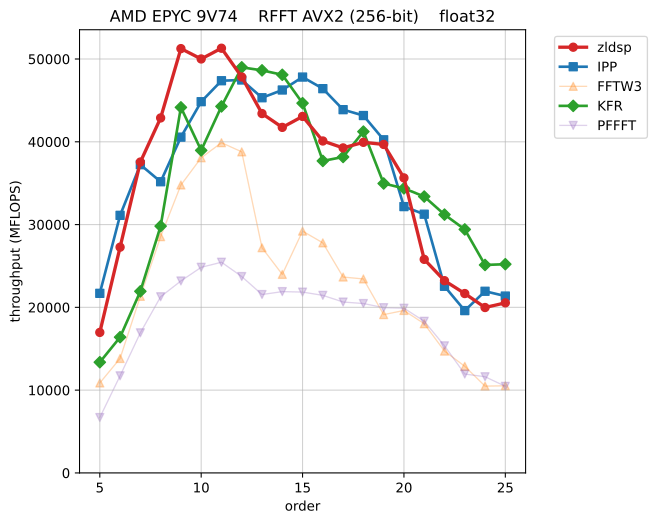
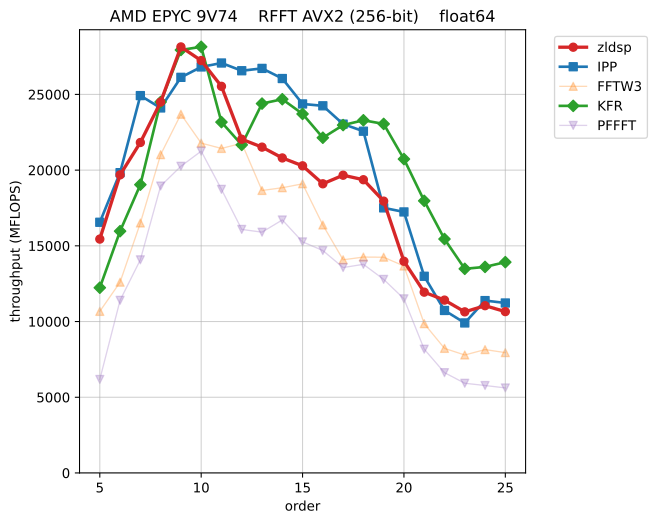
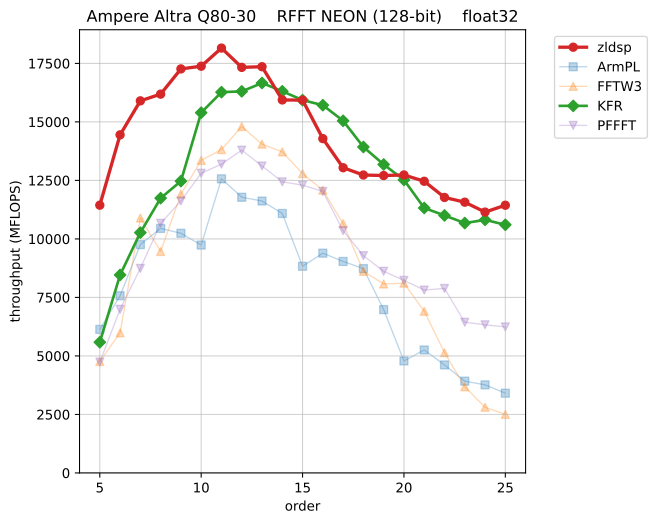
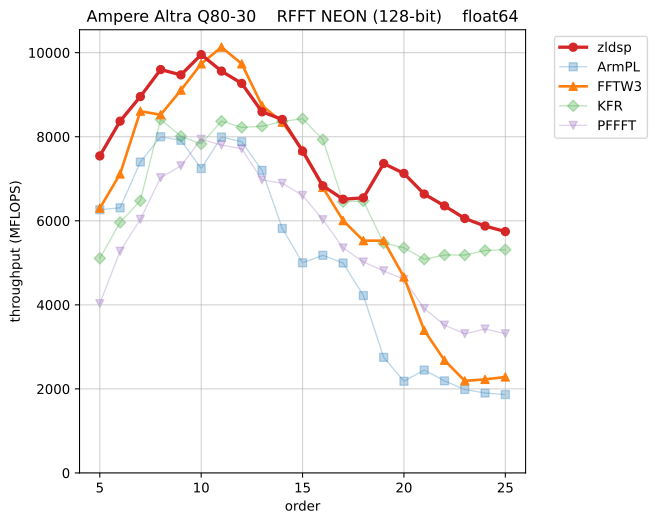
下方展示的是阶数从 order 5 到 order 25 的实数 FFT(Real FFT)基准测试结果。
Apple M4 Pro 14-core (local)
Intel Core i7-8850H (local)
AMD EPYC 7763 (GitHub Actions runner images)
AMD EPYC 9V74 (GitHub Actions runner images)
Ampere Altra Q80-30 (Oracle Cloud VM)
设计架构
低阶(Low Order)
对于低阶(0 <= order <= 5),zldsp_fft 使用专门定制的 CFFT 内核(kernel)。因此,每种变换尺寸都具有固定的实现代码,无需通用的阶段迭代与动态分发逻辑,从而在可行的情况下尽可能将数据保留在 SIMD 寄存器中。
中阶(Medium Order)
对于中阶(6 <= order <= switch_order - 1),zldsp_fft 采用非原地(out-of-place)Stockham DIT 算法设计。其计算调度流程如下:
- 偶数阶(even order):以 Radix-4 阶段开始,后续各级均为 Radix-4 阶段
- 奇数阶(odd order):以 Radix-8 阶段开始,后续各级均为 Radix-4 阶段
中间数据采用对 SIMD 友好的 AoSoA 内存布局;第一级和最后一级则分别融合了与目标 AoS 或 SoA 输入/输出格式之间的转换操作。
高阶(High Order)
对于高阶(switch_order <= order),zldsp_fft 采用 Cooley–Tukey 与 Stockham 混合架构设计。它利用 Radix-4 Cooley–Tukey DIF 宏阶段(macro stages),将大尺寸变换分解为大小大致可容纳在 L1 缓存内的微型 CFFT(micro CFFT)。随后,每个 micro CFFT 均通过中阶 Stockham DIT 设计完成计算。最后,利用可复用的终端缓冲区(terminal buffer)结合 SIMD 寄存器分块转置,将生成的矩阵重排为自然序(natural order)。
阶数切换阈值(Switch Order)
中阶与高阶之间的分界阈值根据检测到的 L1 缓存大小推导得出。算法实现会估算出适合其工作集(working set)的最大变换阶数,并按如下规则选取:
switch_order = maximum_L1_order + 4
参考文献
- Van Loan, Charles. Computational frameworks for the fast Fourier transform. Society for Industrial and Applied Mathematics, 1992.
- Notes on FFTs: for implementers
- OTFFT documentation